
Team SPACE
10918
Who are we, and what is FTC?
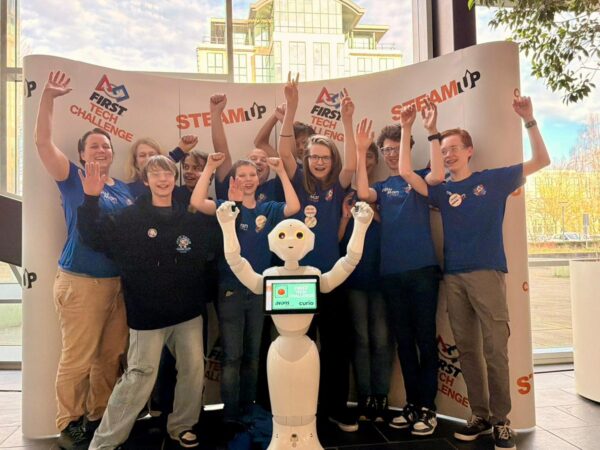
We are FTC Team SPACE (S.P.A.C.E., meaning Self-Programmed android-controlled entity)—a robotics team from Breda, the Netherlands. We were founded in 2015, making us the third-oldest team in the Netherlands!
We are best described as an enthusiastic team with limited experience and a lot of rookies
FIRST Tech Challenge (FTC) is a global robotics competition for students aged 12–18. Teams work together to design, build, and program robots, then compete in alliance-based matches. With help from mentors, students build STEM skills, learn teamwork and “Gracious Professionalism,” and go for awards. Every September, a brand-new challenge is revealed to kick off the season.
Partners

BIOBUZZ
BIOBUZZ, that’s this season’s game. While most information will be revealed at the kickoff on September 12, 2026, we already have some information to share.
BIOBUZZ is the new game for FIRST Tech Challenge. This season is part of FIRST CANOPY™, inspired by nature and powered by innovation.
We already know that Pollen will be the scoring element. Pollen are plastic balls approximately 3 inches (7.6 cm) in diameter. Robots will need to collect Pollen from the field, what teams will need the Pollen for will be revealed at kickoff. Teams can already start thinking about their robot designs.
For more information, you can go to the official FTC BeNeLux site.
The full game rules, gameplay and competition details will be revealed at the September 12 kickoff.
Programming
Our programming team consists of three members who develop and maintain the software that controls our robot. At the start of the season some of our programmers were still new to Java, so we began by using Blocks to learn the basics. As we gained more experience, we gradually transitioned to Java, which we now use for all of our robot code.
To develop and test our programs, we use FTCsim, a simulation environment where we can try ideas and practice programming before using the real robot. This helps us learn new techniques and solve problems even when the robot is not available.
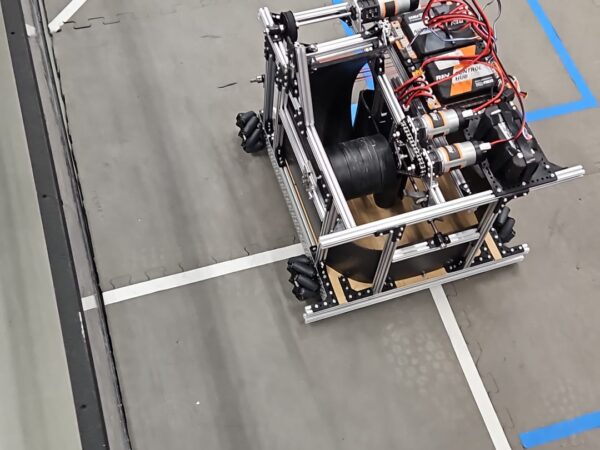
One of our main goals is creating a reliable autonomous program, where the robot performs tasks on its own during the autonomous period. Because our robot uses a mecanum drive, precise programming is required to control movement in all directions. By continuously testing and improving our code, we work to make our robot more accurate and reliable throughout the season.
Engineering
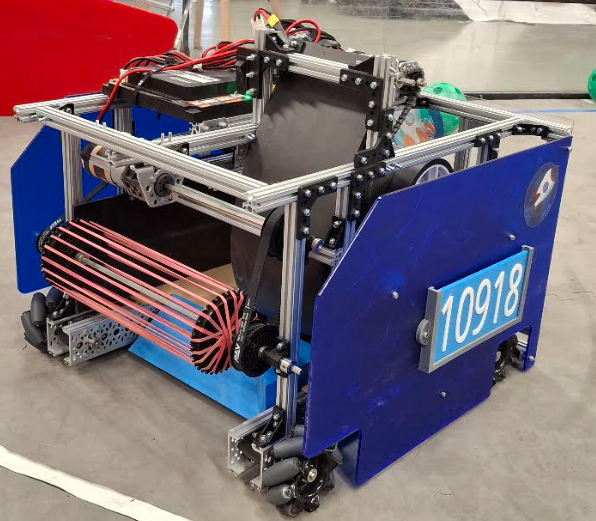
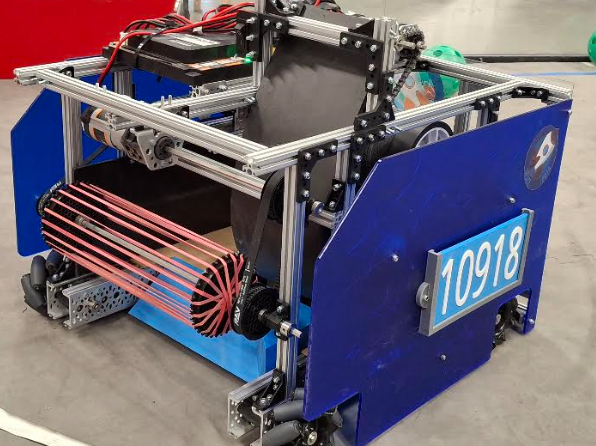
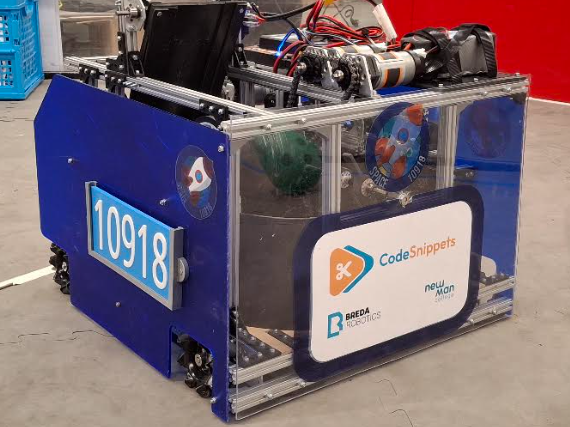
Our engineering team is responsible for designing, building, and improving our robot throughout the season. After our first qualifier, we realized that our robot needed major improvements. The shooter was not consistent and balls often got stuck, which could stop the robot from working during a match. Because of this, we decided to redesign the robot from scratch, keeping only the drivetrain.
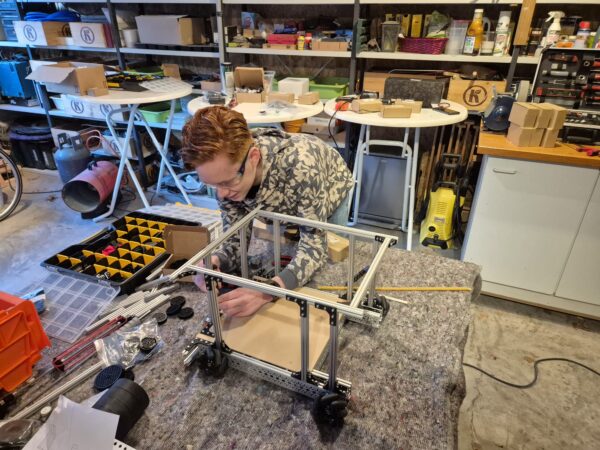
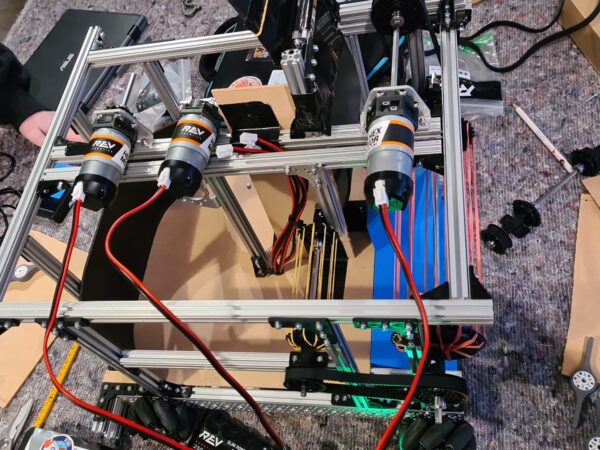
During the winter break we held a large brainstorming session at Breda Robotics, one of our sponsors. There we discussed different design ideas and looked at other robots for inspiration. Eventually we chose a design with a ground intake, a transfer system using DUO Flap Wheels, and a flywheel shooter.
Throughout the build process we faced several challenges. For example, our shooter sometimes launched artifacts in random directions. We solved this by adding side plates and guide strips to create a more controlled path. Our intake also required improvements, so we tested multiple prototypes and adjusted the ramp position and curve. By continuously testing and improving our design, we worked to make our robot more reliable and effective during matches.
Outreach
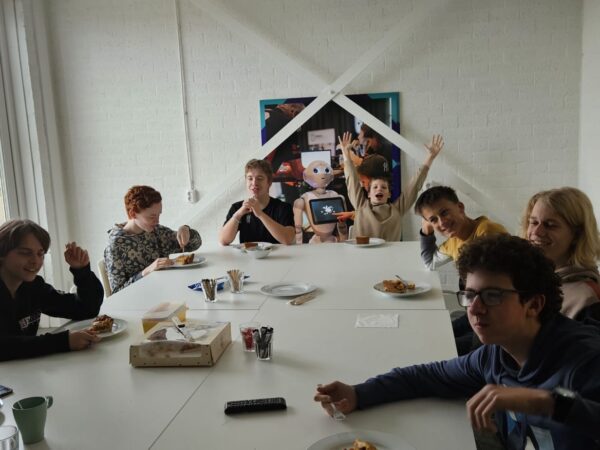
Outreach is all about connecting with other teams, sharing our passion for robotics, and having fun together. One of our priorities is fun—we want every team member to enjoy being part of SPACE. Last season we released Space Game 2, a survival video game made by our former team member Rick, and we even created a teaser trailer for it. We also went to the Minecraft movie as a team to celebrate the end of the season and enjoy some time together.
This season we launched a new social media campaign called #First_around_the_world, aiming to connect teams from all over the globe. We reached out to around 100 teams from countries like France, Brazil, Romania, and Kazakhstan, asking them to share stories and photos of their teams.
We also connected with five teams for meetings on topics like CAD, Outreach, and programming, including Initum Robotics #21063, Team Polaris #18340, and Team Hazmat #13201. These collaborations were great learning experiences and we plan to continue building international connections.
On social media, we started posting more regularly on Instagram, reaching 1,000 followers. We use our channels to share team updates, skits, and connect with other teams, and we hope to grow our reach even further in the future.